
When should police turn off bodycam? #shorts #bodycam #police #RhodeIsland #news #arrest
https://youtube.com/shorts/lQFD8BL3yl0
https://youtube.com/shorts/lQFD8BL3yl0
These issues aren't flaws in Bitcoin's protocol-they're external constraints, like you said in your original post.
Fungibility at the protocol level still holds; one Satoshi is technically equal to another.
The taint or blacklisting is a human layer-governments, exchanges, or analytics firms imposing their rules.
Tools like CoinJoin and Lightning, while not perfect, are part of perpetual advancements on top of bitcoin. Incentives drive governments to try to capture and control, and people are incentivized to innovation to be free.
Bitcoin is revolutionary it is money no one can make more of, and tools can be built on top of it for privacy while bitcoin actively defunds the governments ability to rule arbitrarily by way of a hidden tax through endless debt and money creation, ending their ability to enforce tracking methods or unethical practices against bitcoin.
The tools you mentioned, coinjoin and lightning are still relatively new and there is much to come.
They do give users ways to opt out of that surveillance, and as adoption grows, these tools will become more seamless and advance greatly.
Plus, Bitcoin's decentralized nature means no single entity can enforce these restrictions universally-unlike fiat, where central banks can dictate terms.
That said, concerns about credit scores for addresses are real, repression is real. Chain analysis companies like Chainalysis are building profiles on wallet activity, and some services already use this to flag or block transactions. It's a privacy hit, no doubt.
But nothing in human history has been better at protecting against and defunding fiat money and the rule of law that comes with it.
Bitcoin's open source community is relentless, new privacy solutions keep popping up to counter this, like improved mixing protocols or layer two scaling that obscures transaction details.
Government actions like tracking coins or imposing regulations actually spotlight Bitcoin's value.
When people see moves against private property or sound money, it wakes them up, pushes them to advocate for Bitcoin, even if they're not deep in it themselves.
That growing awareness is huge; it fuels political and social momentum, awareness and education.
And yeah, Bitcoin's hard cap and decentralized setup kneecap governments' ability to print endless fiat to fund wars or prop up markets through subsidies.
It's defunding the very systems trying to enforce things like address blacklisting or coin taint.
These tracking methods are historically common tools of oppression, not new, just repackaged for the digital age.
Bitcoin's base layer fungibility, with one Satoshi always equaling another, stays untouched by that.
Its borderless, immutable, nation-state-resistant nature makes it a unique weapon to dodge centralized overreach.
Concerns about tainted coins and credit scores aren't trivial, but they're not fatal or cause for concern, they are to be expected and they are why bitcoin exists. It wont change in a day and provably, nothing has been as capable as bitcoin
Bitcoin's design lets it evolve through tools like CoinJoin or new privacy tech to keep pushing back.
Bitcoin is not just money but a revolution dismantling centralized control worldwide, ushering in individual human rights and a better, more peaceful world for every person on Earth.
Yeah, lightning on nostr is such a good example.
Over time companies could build trust through track record/reputation, kind of like how people trust visa, amex and mastercard. Cashapp uses lightning, and as it gets built out more, it could facilitate higher amounts.
More layer twos will be built of course, maybe some will outdo lightning.
To state the obvious, like Nik Bhatia in layer money talks about money is built on layers. Gold takes too much energy, it's too costly - not possible to move fast hence paper money and wire transfers.
Critical aspects of the base layer being robust security, transparency, immutability, decentralization and proof of work; it's a feature to have privacy and near instant transactions on secondary layers.
And the obvious again for anyone interested, once you open a payment channel and commit funds, it can stay open indefinitely as long as both parties keep it active, no need to settle on the Bitcoin blockchain.
This lets you transact privately off-chain, potentially forever, creating a kind of self-contained, circular economy within the channel.
The base layer only gets involved if you close the channel or someone tries to cheat, triggering the on-chain settlement.
It’s a powerful setup for privacy and efficiency, as long as the channel stays funded and both sides cooperate.
Lightning channels do involve a degree of trust, but it’s minimal and technical rather than interpersonal.
Both parties need to trust that the other won’t try to cheat by broadcasting an old channel state, but this is deterred by the protocol’s penalty mechanisms-like the watchtower feature or timelocks that let honest parties reclaim funds if someone tries to close the channel maliciously.
But yeah, if someone unilaterally closes the channel, it settles on-chain, and that privacy layer shifts.
Trust in Lightning Network channels often ties to reputation and incentives, especially in practical scenarios.
If you're running a channel with a big player like a mastercard or visa equivalent (some entity with a strong track record) they're heavily incentivized to keep the channel open and act ethically to protect their brand and business.
Same goes for smaller, private setups; reputation and the promise of ongoing business creates a strong motive to avoid screwing over a partner by closing a channel maliciously.
Plus, legal recourse, adding another layer of deterrence. Even in off-grid or remote cases, mutual benefit and social trust can keep things stable. It's less about blind trust and more about reputation and track record and or aligned incentives backed by the protocol's safeguards.
Agree, lightning network is awesome
No the point is cash and gold are fungible and the government tries to make them non fungible.
Bitcoin is the best at repelling this by actively defunding the state with money they cant make more, eliminating arbitrary debt and money creation.
Governments can obviously oppress people and bitcoin is revolutionary because it ends fiat money.
Its transparency is a feature not a bug.
Also, i wrote that, i compiled the information. I said it to ai and it helped me organize it. A lot of it was inspired by breedlove and saylor's series and others.
I don't give a shit what you do.
I took the time to thoughtfully put that together in response. With the soul intent of progress and truth.
You came back by repeatedly changing the subject and providing no thought or information.
Claim my information was made by an LLM, i don't know how to get an LLM to say what i said. ALL the information i shared was compiled and researched by myself over the years.
If you come at someone with bullshit or something wrong about bitcoin or shitcoins, it risks misunderstanding and confusion. Standing up against inaccurate information is important so i'll keep doing that.
Again, no substance. Not engaging the information. Just changing the subject.
And again your analysis is incorrect.
Using an LLM to organize thoughts is not a flaw, your criticism is a reflection of you, nothing else. Your inability to engage the information and your desire to change the subject.
You're saying you don't like LLMs and you judge people who use them.
Looks like I could make the information more understandable for you by asking the LLM to explain it to a child.
If you know how to read, the information is clear.
Maybe you'll be able to combat the information rather than resorting to changing the subject someday.
I'd be happy to have a conversation about why LLMs are valuable, and people who use them will advance past those who don't, even if you don't like them.
For your childish response, and back to the money, we are all free to think what we want but we are not free from the consequences of those thoughts.
#Bitcoin #Nostr
TLDR: Picture AI transforming podcasts, interviews, classrooms, and pro settings into immersive deep dives.
Have a conversation with someone's ideas in real time.
Engage with hosts, guests, teachers, or professionals, explore their research through dynamic digital AI tabs, or show your work in interviews with AI backed portfolios.
With open-source AI, it’s a bias free, truth driven future where ideas grow through engagement, uncovering deeper insights and broader perspectives.
Here's a casual, brief overview, then a more elaborate explanation
What if you could debate a podcast guest's ideas in real time?
Imagine you’re watching a youtube podcast or interview, and the guest drops a link to their personal AI, loaded with all their research, studies, and rock solid info.
You tap in and start exploring, asking questions, diving into details, even debating the AI like it’s the person themselves!
Got a counterpoint? Fire away, and if you have a legitimate challenge to their angle, the AI could ping the guest with real-time feedback, sharpening their stance or calling out biases.
In a flash, your phone’s not just a phone, it’s a portal to engage anyone's ideas or research. A new way to learn dynamically and progress ideas through interaction!
With AI as your wingman, podcasts, documentaries, interviews and talks become immersive journeys.
Pull up a digital tab, packed with all the information a researcher or professional claims important for their idea or stance. Visuals, charts, and verified facts.
You could import an informational AI tab/link into your AI, compare it with information you think is important or anything your AI finds relevant.
Efficient, verifiable, accurate analysis.
This setup would show ideas and knowledge as an ongoing journey, not a final stop.
No more stumbling over words or dodging bias, AI’s got your back, organizing thoughts, fact checking on the fly, and letting anyone dive into the ideas from any angle like a choose your own adventure.
Someone asks a question requiring a detailed response, you could have a tab, or multiple tabs prepared to explain in detail with no hiccups or missteps possible. Access data, resources and references seamlessly.
From classrooms to debates, it’s a bold, truth-driven future where your ideas shine, crystal-clear and unstoppable.
Teachers could use this to let students dig into lessons, ask for clarity, or test ideas, making every class a lively, interactive quest for truth.
In a job interview the applicant could utilize AI.
They might pull up a dynamic portfolio on their phone, packed with real time demos, work samples, and interactive experiments, test scores and analysis all backed by open source AI that’s meticulously organized their skills and ideas.
The employer's AI could analyze the applicants information - presentation and responses on the spot, catching nuances and strengths even a sharp interviewer might miss, stripping away subjective biases or arbitrary snap judgments.
It’s a game changer, pressure’s off the interviewer, and the applicant’s true potential shines through with a clear, data driven assessment of their knowledge and capabilities, revolutionizing how talents spotted.
A more elaborate explanation
The integration of artificial intelligence (AI) into communication, particularly in interviews, presentations, and educational settings, represents a transformative shift in how individuals convey and engage with ideas.
AI’s multimodal capabilities enable the creation of dynamic, personalized, and verifiable content that transcends traditional verbal exchanges.
In interviews, AI can act as an intermediary, organizing thoughts into polished, interactive formats such as immersive digital tabs that combine text, audio, visuals, and data-driven elements like charts or videos.
This approach mitigates communication barriers, including nerves, bias, or incomplete information, by allowing individuals to pre-prepare nuanced responses using AI to anticipate questions, refine arguments, and incorporate verified references.
Such systems, open-source and transparent, enhance credibility by providing real time fact checking and feedback, fostering accountability and reducing reliance on emotional manipulation or propaganda.
In educational contexts, AI facilitates personalized learning by enabling students to explore a teacher’s ideas at their own pace, ask clarifying questions, or engage in dynamic reasoning, while providing instructors with real-time insights into student engagement and understanding.
This interactivity promotes deeper critical thinking and reduces cognitive bias, creating a collaborative environment for knowledge refinement.
Potential platforms, leveraging tools like xAI’s capabilities, could integrate seamless transcription, summarization, and visualization, making information accessible and engaging.
This evolution in communication promises greater efficiency, inclusivity, and intellectual rigor, redefining interpersonal and academic interactions as immersive, truth-driven experiences.
You're not addressing the information.
You're providing no information, substantive thought or critical analysis.
You're providing no information, substantive thought or critical analysis.
Bitcoin's fungibility, akin to cash or gold, faces no inherent flaw but reflects external pressures like governmental overreach, not the protocol itself.
In monetary theory, fungibility ensures units are interchangeable, a criterion Bitcoin meets at its core, where one Satoshi equals another.
Its transparent design enables verifiable auditability, reinforcing trust, integrity, and resilience-a feature absent in opaque systems like Monero.
Bitcoin's transparent blockchain ensures auditable integrity, enabling proactive countermeasures against nefarious actions like double-spending or 51% attacks, fostering trust.
Anyone, holders or newcomers can verify transactions or reject invalid blocks, sparking participation like buying Bitcoin or running nodes when threats, like nation-state, corporate, or central bank attacks, become visible, strengthening its self-sustaining security.
Provable unethical actions against Bitcoin raise awareness, inspiring education, adoption, and political advocacy for values like private property and sound money.
This openness turns perceived vulnerabilities into a robust security feature, enabling prompt calls to action that grow resilience.
Ever-growing advancements, tools like CoinJoin, Lightning Network, eCash, and Nostr, enhance practical fungibility by enabling private, uncensorable transactions without sacrificing base layer integrity.
Bitcoin’s open-source, fully transparent nature ensures perpetual advancement, open to all, with unstoppable free markets upholding its integrity.
External interventions, like government restrictions seen with gold bans, cash tracking, or efforts against privacy tools like CoinJoin, do not undermine Bitcoin's intrinsic properties, just as state efforts failed to suppress cryptography.
Its decentralized, unalterable cap and nation-state-resistant design erode centralized control, defunding mechanisms of arbitrary regulation.
This ensures its sound money properties: scarcity, portability, divisibility, fungibility, durability, verifiability, and universal demand sustain unmatched global adoption, outstripping alternatives prone to centralized risks.
Bitcoin's fungibility, akin to cash or gold, faces no inherent flaw but reflects external pressures like governmental overreach, not the protocol itself.
In monetary theory, fungibility ensures units are interchangeable, a criterion #Bitcoin meets at its core, where one Satoshi equals another.
Its transparent design enables verifiable auditability, reinforcing trust, integrity, and resilience-a feature absent in opaque systems like Monero.
Bitcoin's transparent blockchain ensures auditable integrity, enabling proactive countermeasures against nefarious actions like double-spending or 51% attacks, fostering trust.
Anyone, holders or newcomers can verify transactions or reject invalid blocks, sparking participation like buying Bitcoin or running nodes when threats, like nation-state, corporate, or central bank attacks, become visible, strengthening its self-sustaining security.
Provable unethical actions against Bitcoin raise awareness, inspiring education, adoption, and political advocacy for values like private property and sound money.
This openness turns perceived vulnerabilities into a robust security feature, enabling prompt calls to action that grow resilience.
Ever-growing advancements, tools like CoinJoin, Lightning Network, eCash, and Nostr, enhance practical fungibility by enabling private, uncensorable transactions without sacrificing base layer integrity.
Bitcoin’s open-source, fully transparent nature ensures perpetual advancement, open to all, with unstoppable free markets upholding its integrity.
External interventions, like government restrictions seen with gold bans, cash tracking, or efforts against privacy tools like CoinJoin, do not undermine Bitcoin's intrinsic properties, just as state efforts failed to suppress cryptography.
Its decentralized, unalterable cap and nation-state-resistant design erode centralized control, defunding mechanisms of arbitrary regulation.
This ensures its sound money properties: scarcity, portability, divisibility, fungibility, durability, verifiability, and universal demand sustain unmatched global adoption, outstripping alternatives prone to centralized risks.
Yeah, we're using computers. What's important is the information and critical thought
Oh please explain your claim, detail and evidence please, enlighten me.
Value is indeed subjective, and here it's driven by sound money (store of value, medium if exchange) properties - scarcity, portability, divisibility, fungibility, durability, verifiability, and universal demand.
Bitcoin's protocol, with its unalterable cap, incorruptible design, nation-state resistance, and support for uncensorable systems like Lightning and Nostr, uniquely satisfies these criteria, drawing global demand unmatched by any asset in history.
Bitcoin's protocol, with its unalterable cap, incorruptible design, nation-state resistance, and support for uncensorable systems like Lightning and Nostr, uniquely satisfies these criteria, drawing global demand unmatched by any asset in history.
In economic and cryptographic terms, Bitcoin’s so-called diminishing security budget is not a vulnerability but a deliberate design feature fostering resilience and innovation.
The halving mechanism, reducing block subsidies to 3.125 BTC post-2024, aligns with Austrian economic principles of sound money, ensuring scarcity while incentivizing miners through rising transaction fees and Bitcoin’s appreciating value.
Historical data shows network hash rate recovering post-halvings-2020 saw a 25% dip followed by a 20% surge within months-demonstrating market-driven adaptability.
Bitcoin’s unstoppable worldwide free market and location-agnostic mining incentivizes energy advancement, efficiency, innovation and sustainability.
#Bitcoin also enables the utilization of wasted and stranded energy. It harnesses remote and renewable energy, enabling infrastructure growth in underserved regions like sub-Saharan Africa (check of the company "Gridless").
Far from a flaw, this incentivizes global participation, securing the network as a public utility for an automated future, akin to essential software for AI-driven systems.
Unlike inflationary models, Bitcoin’s transparent, finite supply fortifies it against centralization risks, ensuring long-term security and uncensorable integrity.
Looking ahead, as block rewards approach zero over the next century, Bitcoin’s rising value ensures miner incentives endure, with each Satoshi carrying greater purchasing power.
This drives global participation, leveraging energy innovations-from stranded renewables to micro-mining integrated into devices-securing the network as a public utility.
Much like essential software, mining will underpin secure, uncensorable monetary and communication systems, including AI and drone networks, reinforcing Bitcoin’s decentralized integrity against any centralization threat.
Speculating on Bitcoin’s future security budget overlooks its proven resilience. Altering a system, robustly designed for millennia of sound money and valued by millions, to address theoretical flaws risks disrupting its intricate design and balance.
Such shortsighted interventions ignore Bitcoin’s market-driven adaptability, evidenced by post-halving hash rate recoveries, and its endurance against countless critics since 2009, from early skeptics to "crypto" enthusiasts and central banking naysayers, proving its design’s foresight.
Your point about money demand and purchasing power is well-taken but incomplete.
In monetary economics, the predictability of a currency's supply does not inherently ensure its efficacy as a store of value. Bitcoin's protocol-enforced scarcity, capped at 21 million coins with diminishing issuance, aligns with Austrian economic principles of sound money, prioritizing absolute scarcity and verifiability over elastic supply models like Monero's tail emission.
As Saifedean Ammous argues, Bitcoin's transparent ledger and scalable divisibility, bolstered by second-layer solutions like ecash or Lightning as experienced here on Nostr, deliver both robust integrity and private, efficient transactions-outstripping alternatives prone to dilution or hidden centralization risks.
Even a tiny amount of money, like one dollar, could theoretically supply an entire economy if it’s divisible enough.
Author of The #Bitcoin Standard, Saifedean writes: “What matters in money is its purchasing power, not its quantity, and as such, any quantity of money is enough to fulfil the monetary functions, as long as it is divisible and groupable enough to satisfy holders’ transaction and storage needs.”
This comes from a summary of the book on Medium, which captures the essence of his argument about divisibility being key to a currency’s functionality, not its total amount.
Something else he's said that I agree with: Money’s effectiveness depends on how well it can be divided to meet economic demands, not how much of it exists. For example, even a single dollar could work if it could be split into tiny fractions for transactions, much like how Bitcoin’s is almost infinitely divisible supports its scalability and rids any concern of "elasticity".
A fixed supply, when paired with sufficient divisibility, can dynamically adapt to demand through market-driven adjustments in purchasing power, not artificial supply expansion. In summary, Bitcoin’s current and potential infinite divisibility through protocol upgrades or layered solutions eliminates the need for an elastic supply while preserving its scarcity.
This makes it a superior alternative to gold, which is prone to capture and supply shocks, fiat, which suffers from centralized overissuance or any ever increasing commodity, even if the increase is predictable.
Additionally, Bitcoin’s strictly capped supply of 21 million coins, paired with its scalable divisibility, distinguishes it from cryptocurrencies with perpetually increasing issuance, even if predictable.
Such coins, akin to commodities, risk gradual dilution of value and susceptibility to centralized mining incentives, undermining their long-term reliability as a store of value compared to Bitcoin’s unalterable scarcity.
By enabling transactions at increasingly granular levels, Bitcoin ensures that its fixed supply of 21 million coins can meet the demands of a global economy without diluting investors, rendering the elasticity argument obsolete.
Saifedean argues that Bitcoin’s fixed supply is a cornerstone of its value as a money.
Unlike fiat currencies, which central banks can print at will, or even gold, which can see supply shocks from new mining tech or discoveries, Bitcoin’s hard cap is coded into its protocol, making its scarcity absolute and predictable.
This fixed supply with new issuance halving roughly every four years mimics the increasing difficulty of extracting gold but without the physical world’s vulnerabilities, like new mines flooding the market.
In the book, he says Bitcoin’s supply schedule “ensures that at any point in time, there will only ever be a fixed amount in circulation, and no authority can change or violate this,” which he contrasts with gold’s historical supply swings, like the Spanish conquest or the California Gold Rush mentioned earlier.
This ties into his broader point that scarcity, enforced by code rather than physical limits, makes Bitcoin resistant to the capture and manipulation gold falls prey to.
No, no one can control the price of #bitcoin.
No one can make more bitcoin and there is no way to know if a Country or a company is going to start buying bitcoin.
There is no way to know when small businesses or groups of people around the world will start buying more bitcoin.
Discourse on Bitcoin's price stability often overlooks its decentralized nature, rendering attempts by large entities to peg its value-whether to gold or a fixed dollar amount-futile. Historical precedents, from Roman coinage to the Medici banking collapse, reveal centralized assets like gold succumb to capture and manipulation, whereas Bitcoin's fixed supply and global, permissionless market ensure it flows to long-term holders, reinforcing its role as an incorruptible store of value.
Any effort to control its price only accelerates its distribution to stronger hands, as its value derives not from centralized dictate but from subjective, free-market dynamics rooted in scarcity and sovereignty.
Bitcoin demonetizes gold. Beyond your claims, including your claims of being educated on bitcoin, you should study bitcoin more. Or keep trying to guess the price or how people will set the price of bitcoin. Good luck.
Assertions that gold's role as a store of value (SoV) predates fiat currency and persists independently of it overlooks the historical mechanisms through which gold's monetary role has consistently intertwined with centralized control and, ultimately, fiat systems.
While gold's inherent properties: scarcity, divisibility, portability, and near-universal desirability have long positioned it as a preferred medium of exchange and SoV, these same attributes render it vulnerable to capture and manipulation, fostering centralization that paves the way for fiat-like systems.
My argument is not that gold lacks value absent fiat but that its practical application as money throughout history reveals a paradox: its strengths enable its adoption, yet its physicality ensures its capture, leading to systems of control that mirror or evolve into fiat arrangements. Historically, gold's role as a SoV has been inseparable from power dynamics.
From the Roman Empire's aureus to
medieval European coinage, gold's concentration in the hands of rulers, conquerors, and elites often through war, tribute, or monopolistic mining enabled its use as a tool of centralized authority.
The spoils of conquest, such as the influx of New World gold into Spain during the 16th century, illustrate this capture.
The resulting supply shock fueled inflation, destabilizing economies across Europe, as documented by historians like Fernand Braudel, who noted price increases of 300-400% in Spain over a century.
Similarly, the California Gold Rush of 1848-1855 disrupted monetary stability, flooding markets with gold and undermining its purchasing power locally.
These examples counter claims that gold's supply growth has consistently been outpaced by productivity.
While human productivity has indeed grown, gold's supply is neither predictable nor stable; technological advancements in mining (e.g., hydraulic mining in the 19th century or modern cyanide leaching) and transportation (e.g., transatlantic trade routes) have repeatedly introduced supply shocks, altering its scarcity and value in localized economies.
The purchasing power of gold depends not only on economic activity outpacing supply growth but also on the absence of manipulation.
Gold's physical nature makes it prone to adulteration (e.g. debasement with base metals, as seen in Roman and Byzantine coinage) and centralized control, whether by mints, banks, or governments.
The emergence of fractional reserve banking in the 17th century, rooted in goldsmiths issuing receipts for gold they held, directly ties gold to fiat-like systems.
These receipts, circulating as currency, often exceeded physical gold reserves, creating a proto-fiat mechanism prone to overissuance and crises, evidenced by the collapse of early banking houses like the Medici.
This historical trajectory demonstrates that gold's use as money facilitates centralized systems of credit and control, which are precursors to modern fiat currencies.
To dismiss concerns about gold's vulnerabilities as "simple forgery", underestimates the systemic implications.
Adulteration, hoarding, and monopolistic control are not mere aberrations but intrinsic to gold's physicality.
Unlike a purely digital or decentralized asset, gold's verifiability requires trust in intermediaries mints, assayers, or banks which invites manipulation.
The transition from gold-backed to fiat currencies in the 20th century, culminating in the abandonment of the gold standard in 1971, was not an anomaly but a culmination of gold's limitations: its centralization enabled governments to shift to fully fiat systems, unmoored from physical constraints yet built on the trust gold once commanded.
The supply shocks, coupled with technological shifts in mining and transport, have repeatedly disrupted gold's stability as an SoV.
These flaws, capture, manipulation, and erratic supply mean that gold's role as money, while enduring, is neither independent of nor immune to the centralized, fiat-like systems it engenders.
Far from being a stable SoV in isolation, gold's history reveals a cyclical pattern of concentration and control, challenging the notion that it stands apart from fiat dynamics.
Also, study Austrian economics, value is always subjective.
Through remembering 12 words, bitcoin offers borderless, nationstate resistant, incorruptible money with no physical encumbrance.
Nothing else on Earth can or ever has been able to provably make that claim.
The ability to send money anywhere on earth instantly with no intermediary and almost no fees, combined with the ability to move massive wealth anywhere in 15 minutes cheaply with no physical encumbrance is valuable.
What would it cost to move gold and how long would it take? Security, crossing boarders, its weight, all add to transport cost.
How about someone leaving a war zone, in a dangerous part of town, a refugee or anyone crossing a border. What's safer, 12 words or carrying gold?
Worth looking into the human rights foundation to see how bitcoin has helped dissidents and people escaping atrocities around the world.
Anybody who wants sovereign savings will value bitcoin, regardless of your thoughts on it.
If you don't believe bitcoin is verifiable and unstoppable, study it and learn.
If you're curious or think the assertions made about bitcoins capabilities could be valuable if true but you're skeptical, find out for yourself to know for sure. Conviction comes from education and seeking truth.
#Bitcoin
Your assertion that gold’s role as a store of value (SoV) predates fiat currency and persists independently of it overlooks the historical mechanisms through which gold’s monetary role has consistently intertwined with centralized control and, ultimately, fiat systems.
While gold’s inherent properties scarcity, divisibility, portability, and near-universal desirability have long positioned it as a preferred medium of exchange and SoV, these same attributes render it vulnerable to capture and manipulation, fostering centralization that paves the way for fiat-like systems.
My argument is not that gold lacks value absent fiat but that its practical application as money throughout history reveals a paradox: its strengths enable its adoption, yet its physicality ensures its capture, leading to systems of control that mirror or evolve into fiat arrangements. Historically, gold’s role as a SoV has been inseparable from power dynamics.
From the Roman Empire’s aureus to medieval European coinage, gold’s concentration in the hands of rulers, conquerors, and elites often through war, tribute, or monopolistic mining enabled its use as a tool of centralized authority.
The spoils of conquest, such as the influx of New World gold into Spain during the 16th century, illustrate this capture.
The resulting supply shock fueled inflation, destabilizing economies across Europe, as documented by historians like Fernand Braudel, who noted price increases of 300-400% in Spain over a century.
Similarly, the California Gold Rush of 1848-1855 disrupted monetary stability, flooding markets with gold and undermining its purchasing power locally.
These examples counter your claim that gold’s supply growth has consistently been outpaced by productivity.
While human productivity has indeed grown, gold’s supply is neither predictable nor stable; technological advancements in mining (e.g., hydraulic mining in the 19th century or modern cyanide leaching) and transportation (e.g., transatlantic trade routes) have repeatedly introduced supply shocks, altering its scarcity and value in localized economies.
Your point about money demand and purchasing power is well-taken but incomplete.
The purchasing power of gold depends not only on economic activity outpacing supply growth but also on the absence of manipulation.
Gold’s physical nature makes it prone to adulteration (e.g. debasement with base metals, as seen in Roman and Byzantine coinage) and centralized control, whether by mints, banks, or governments.
The emergence of fractional reserve banking in the 17th century, rooted in goldsmiths issuing receipts for gold they held, directly ties gold to fiat-like systems.
These receipts, circulating as currency, often exceeded physical gold reserves, creating a proto-fiat mechanism prone to overissuance and crises, evidenced by the collapse of early banking houses like the Medici.
This historical trajectory demonstrates that gold’s use as money facilitates centralized systems of credit and control, which are precursors to modern fiat currencies.
You dismiss concerns about gold’s vulnerabilities as “simple forgery”, but this underestimates the systemic implications.
Adulteration, hoarding, and monopolistic control are not mere aberrations but intrinsic to gold’s physicality.
Unlike a purely digital or decentralized asset, gold’s verifiability requires trust in intermediaries mints, assayers, or banks which invites manipulation.
The transition from gold-backed to fiat currencies in the 20th century, culminating in the abandonment of the gold standard in 1971, was not an anomaly but a culmination of gold’s limitations: its centralization enabled governments to shift to fully fiat systems, unmoored from physical constraints yet built on the trust gold once commanded.
Your critique of a fixed supply, referencing the “only 21 million” philosophy, is a valid caution against dogmatic monetary policy.
However, my argument does not hinge on advocating a fixed supply but on exposing gold’s paradox: its monetary properties make it desirable, yet its physicality ensures its capture and centralization, linking it to fiat systems across history.
The supply shocks you downplay, coupled with technological shifts in mining and transport, have repeatedly disrupted gold’s stability as an SoV.
These flaws, capture, manipulation, and erratic supply mean that gold’s role as money, while enduring, is neither independent of nor immune to the centralized, fiat-like systems it engenders.
Far from being a stable SoV in isolation, gold’s history reveals a cyclical pattern of concentration and control, challenging the notion that it stands apart from fiat dynamics.
You're evading the point, this reply addresses your comment "explain to me how gold is still a solid SoV for 4000 years DESPITE a 1-2% supply inflation." In relation to monero.
Again, bitcoin is hard capped at 21 million, distributing the set amount is different than an uncapped supply increase
Again, bitcoin is hard capped at 21 million, distributing the set amount is different than an uncapped supply increase
Bitcoin has a hard cap of 21 million
Nope
What should Tucker ask Candace?
We’re giving TCN members a chance to help shape our interview airing this Friday. If you’ve got a thoughtful, challenging, or curious question, this is your moment.
http://youtube.com/post/UgkxvCHu6kip-quaOkp1hkeHmk4olB9hw96O
We’re giving TCN members a chance to help shape our interview airing this Friday. If you’ve got a thoughtful, challenging, or curious question, this is your moment.
http://youtube.com/post/UgkxvCHu6kip-quaOkp1hkeHmk4olB9hw96O
Modern Medicine is Keeping You Sick – Break the Cycle w/ Michael Morelli
Bitcoiners have taken back control of their money, now it's time to do the same with health. Michael Morelli, the founder of FitScript, joins Eric V Stacks to share his journey through addiction, bankruptcy, and divorce and how he rebuilt his life through discipline and self-mastery.
They discuss how currency debasement traps the average person, the roots of addiction, the collapse of masculine identity in the wake of the feminist revolution, and the physical and psychological impact of TRT, peptides, and sauna.
Michael Morelli is the founder of FitScript which helps turn men into unstoppable leaders using data-driven protocols.
https://youtu.be/Smz-wfzDS8w
Paul Saladino Snack Review! 🌟 Lineage… who should buy these? #foodstr
https://youtube.com/shorts/UHa3lu2jH5I
https://youtube.com/shorts/UHa3lu2jH5I
Have You EVER Heard Ghislaine Maxwell’s Voice? Adam Hasn't Until NOW
https://youtube.com/shorts/fbPh9AtGLDo
https://youtube.com/shorts/fbPh9AtGLDo
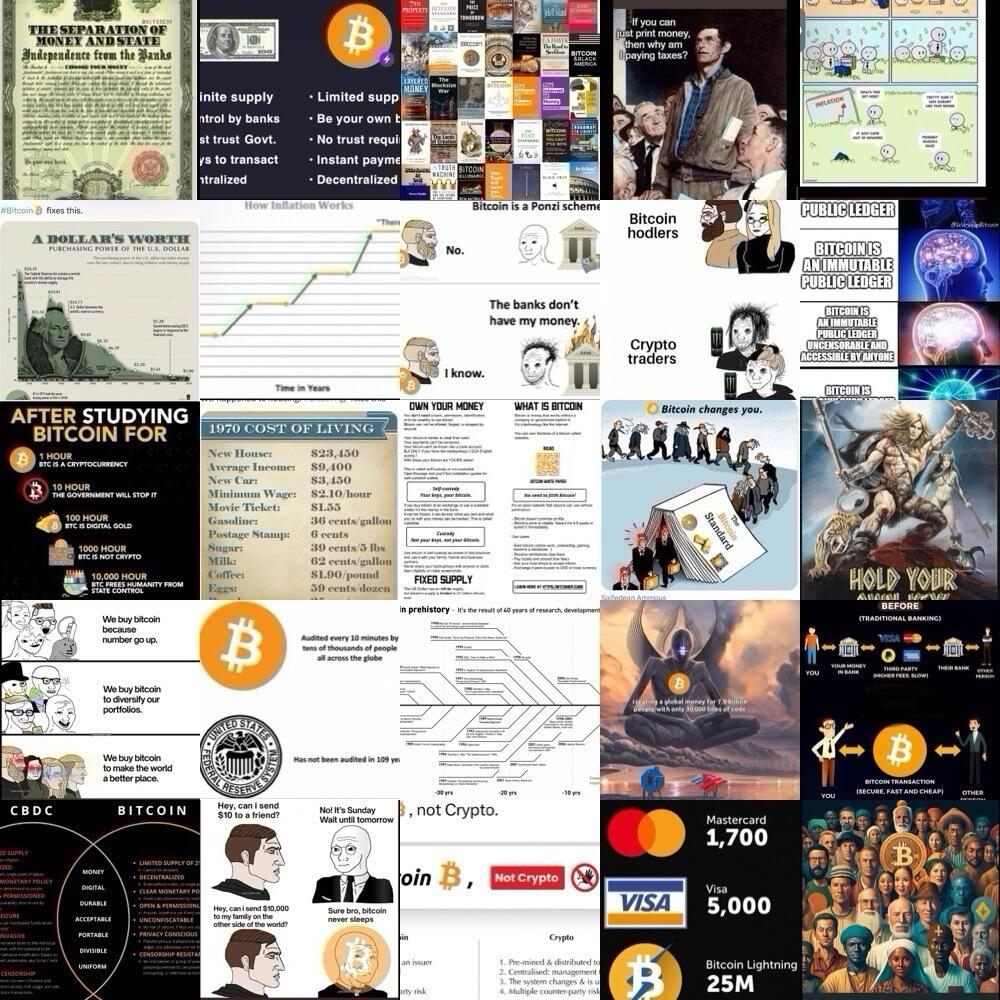
Bitcoin fixes this, study #bitcoin
Ghislaine Maxwell asks Supreme Court to overturn conviction
https://youtube.com/shorts/194vc7401-Y
Ghislaine Maxwell asks Supreme Court to overturn conviction
https://youtube.com/shorts/194vc7401-Y